

Introduction: Why Mental Health Journaling Matters in 2026
In today’s fast-moving world, many people feel mentally overloaded.
Constant exposure to:
- Work pressure
- Social media
- Stress
- Anxiety
- Information overload
…can make it difficult to process emotions clearly.
That’s why mental health journaling is becoming one of the most powerful self-care habits in 2026.
A mental health journal is not about “perfect writing.”
It’s a private space to:
- Understand emotions
- Reduce mental clutter
- Improve self-awareness
- Process thoughts more calmly
Research and wellness experts increasingly highlight journaling as a supportive habit for:
- Stress management
- Emotional regulation
- Mindfulness
- Mental clarity
You only need a few minutes daily.
What is a Mental Health Journal?

A mental health journal is a personal space where you regularly write thoughts, emotions, and reflections.
It may include:
- Mood tracking
- Gratitude notes
- Stress triggers
- Daily reflections
- Emotional check-ins
Unlike academic or professional writing:
There are no rules.
The goal is emotional clarity—not perfection.
Benefits of Mental Health Journaling

-
Reduces Mental Overload
Writing thoughts down may help reduce mental clutter and overthinking. -
Improves Emotional Awareness
Journaling helps people identify:- Stress patterns
- Emotional triggers
- Mood changes
-
Supports Stress Management
Many people feel calmer after expressing thoughts privately. -
Encourages Mindfulness
Journaling slows down mental noise and improves self-reflection. -
Tracks Personal Growth
Over time, journals can reveal:- Emotional progress
- Habit patterns
- Positive changes
Small reflections create deeper self-awareness.
Why Journaling Feels Difficult Initially

Many beginners feel:
- “I don’t know what to write.”
- “My thoughts are messy.”
- “I’m not good at journaling.”
This is completely normal.
Mental health journaling is not about:
- ❌ Perfect grammar
- ❌ Beautiful writing
- ❌ Deep philosophical ideas
It’s simply about honesty.
Even a few sentences matter.
How to Start a Mental Health Journal

-
Choose Your Format
You can use:- A notebook
- A digital app
- Notes on your phone
- Printable templates
Choose what feels easiest to maintain.
-
Start Small
You do not need long entries.- 5 minutes daily
- 3 short sentences
- One emotional reflection
…is enough to begin.
-
Write Without Judgment
Do not worry about:- Grammar
- Structure
- “Good writing”
This journal is for you.
-
Build a Routine
Helpful journaling times:- Morning reflections
- Before sleep
- During stressful days
Consistency matters more than length.
-
Focus on Feelings, Not Perfection
Instead of writing “correctly,” ask:- How do I feel today?
- What stressed me today?
- What helped me feel calm?
Mental Health Journal Prompts

If you don’t know what to write, try prompts like:
Daily Reflection Prompts:
- What emotion did I feel most today?
- What drained my energy?
- What made me feel safe or calm?
- What am I grateful for today?
- What do I need more of emotionally?
Prompts help reduce overthinking.
Free Mental Health Journal Template
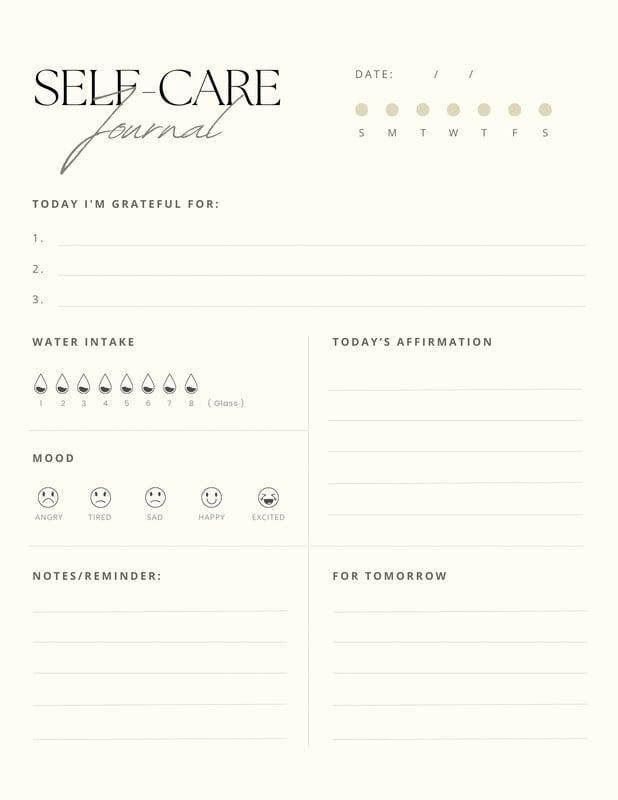
Daily Mental Health Check-In
Date: ____________________
Mood Today:
😊 😐 😔 😴 😰
Energy Level (1–10):
____________________
What Emotion Did I Feel Most Today?
___________________________________________
What Triggered Stress Today?
___________________________________________
One Positive Moment:
___________________________________________
What Do I Need Tomorrow?
___________________________________________
Gratitude Note:
___________________________________________
Simple templates make journaling easier and less overwhelming.
Common Journaling Mistakes
- Trying to Be Perfect – Journaling should feel natural, not performative.
- Writing Only During Bad Days – Positive reflections matter too.
- Comparing Journals Online – Your journal does not need aesthetic perfection.
- Forcing Long Entries – Short honest writing is enough.
Digital Journaling vs Paper Journaling
| Paper Journals | Digital Journals |
|---|---|
| More personal | Convenient |
| Less screen time | Easy to access |
| Slower and reflective | Good for busy lifestyles |
Both options work. Consistency matters more.
Journaling & Mental Wellness
Journaling is not a replacement for professional mental healthcare.
However, it may support:
- Emotional awareness
- Stress management
- Healthy self-reflection
Some people also combine journaling with:
- Therapy
- Meditation
- Mindfulness practices
Building a Sustainable Journaling Habit
Beginner-Friendly Tips:
- Keep the journal visible
- Write without pressure
- Start with 5 minutes
- Use prompts when stuck
Small daily habits become powerful over time.
Final Thoughts
Mental health journaling is one of the simplest wellness habits anyone can start.
You do not need:
- Expensive tools
- Perfect writing skills
- Long daily entries
You only need honesty and consistency.
Sometimes writing your thoughts down is the first step toward understanding them better.
Conclusion
A mental health journal can become a powerful space for:
- Reflection
- Emotional clarity
- Stress management
- Self-awareness
In a world full of constant noise and distraction, journaling creates a few quiet moments to reconnect with yourself.
Healing and self-understanding often begin with simple awareness.